The Only Magazine for Children's Art
Sep 25, 2026
Pumpkins and polka dots in Amsterdam
Considering Yayoi Kusama lived to more than 97 years of age, her passing on August 14 should not have been treated as an occasion of sadness, but as a reason to celebrate the life of a remarkable woman who was still creating and exhibiting up until the very end. Indeed, told by her conservative Japanese parents at a very young age that girls cannot become professional artists, she would ultimately move to New York City, find recognition and prosperity in the 60s and 70s (with a little help from Georgia O'Keefe), and then in the last decade-and-a-half or so, rocket to a whole other level of global fame.
It would not be unreasonable to say that, in fact, she had become the most recognizable comtemporary visual artist in the world. This year alone, she had just come off a major retrospective at Cologne, Germany's Museum Ludwig, at this very moment has a special exhibition of her beloved pumpkins on view at the Cincinnati Art Museum (through October 18), and has permanent or temporary installations in prominent locations all around the globe.
Now Amsterdam's venerable Stedelijk Museum gets to pay her proper posthumous tribute, with a comprehensive survey that opened on September 11, and will be viewable through January 17, 2027. Now, while one might immediately assume it was pulled together last minute after her passing, that's not actually how these things work; advance tickets, in fact, went on sale all the way back on April 29. But there is an obvious poignancy to the timing, marking the first opportunity to consider her work as a no-longer-living artist.
Yet one of the main compulsions to visit this eponymously titled exhibit - other than Amsterdam being a wonderful city to spend time in during the autumn season - is for the sheer joy of remembrance, and to be reminded that what she gave to the world will actually live on forever. And Rein Wolfs, director of the Stedelijk Museum, enthusiastically promises that it "will be a feast for the eyes, where one can truly lose themselves in her extraordinary art."

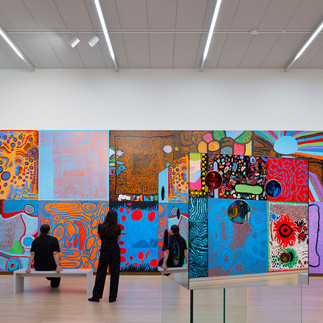


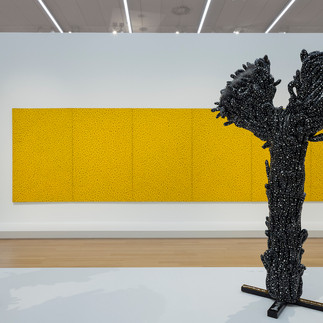
Yet also imagine the rare opportunity to peek into the soul of that little girl in Matsumoto, Japan, who wanted so badly to become an artist, whatever her mom might have been saying to her to discourage her from that. Some of the drawings here date to the 1930s, before there was even WWII, which would tragically end with her country being devastated by a pair of atomic bombs. With works featured here that date to when she was barely ten years old, we learn that she had already begun painting the polka dots that would decades later become so utterly iconic.
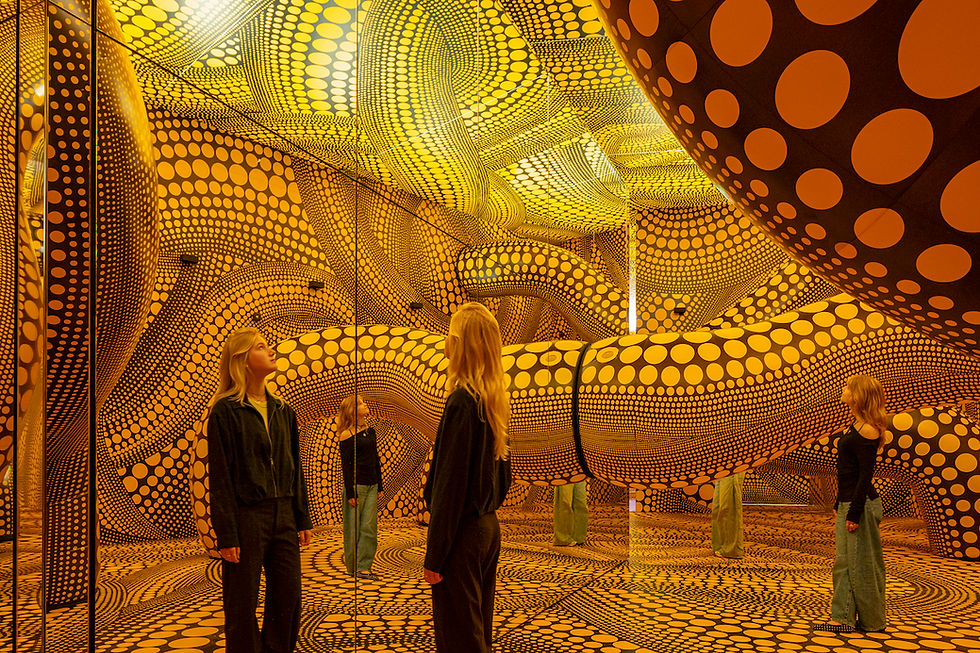
Still, all the nostalgic charm is contextualized within "blockbuster" curatorial ambitions. To be sure, included also are her perception-altering 'Infinity Mirror Room' "portals" (which arguably rocketed her to fame, resulting in long-lines and near hysteria in cities around the world); her ecstatically cheerful pumpkins; her giant, and of course polka dotted flowers, which look a bit like props from a 90s British acid-house rave; and enough wondrously fantastical immersive experiences to surely make you forget for a bit that you still have to go back out into the normal world when you've completed your viewing of the exhibit.
Which, we must point out, is all the more reason to bring the kids when you visit, as they will surely never view the world in the same way again - nor will you.
"Yayoi Kusama was an artist who compelled us to see the world through a different lens," Wolfs rightly observes. "Even at her advanced age, she continued to captivate audiences, drawing in visitors of all generations with her mesmerizing creations."
Rest in joy, Yayoi.